Introduction
We have all been there, in that moment when we look back and think, “If only I knew then what I know now…” But here is the thing: we were doing our best. And that is important.
Remember the following quote, simple and yet so profound.
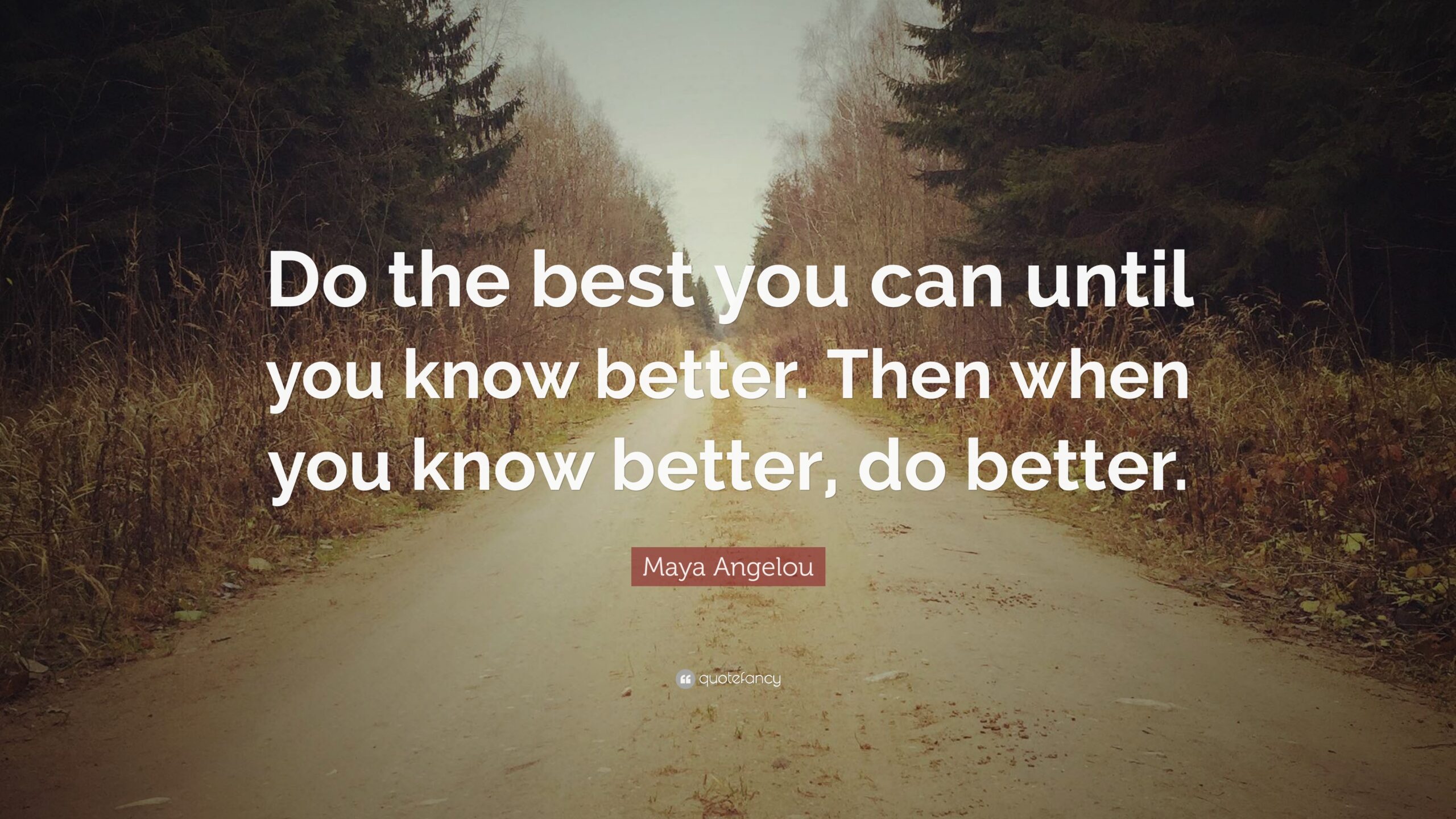
“Do the best you can until you know better. Then when you know better, do better.” – Maya Angelou
This quote resonates with me on so many levels, both professionally and personally and I wanted to take some time to share my thoughts and experiences around it.
Application in professional life
In the world of software development, the concept of doing our best with what we know is fundamental. We write code, build features and design systems based on the knowledge we currently possess. We make the best decisions we can, given the information and resources at hand. But as time progresses, we learn more. We gather user feedback, uncover bugs, understand system limitations and recognize better ways of doing things. And when we know better, we do better. We refactor the code, improve the design and enhance the features.
This philosophy is at the core of the Agile methodology and the role of a Scrum Master. A Scrum team starts a sprint with the best understanding it has. Throughout the sprint, the team learns, adapts and improves. They retrospect and carry those lessons into the next sprint. Each sprint is an opportunity to “do better” based on the knowledge gained from the previous one.
Application in personal life
On a personal level, I have seen how this mantra applies to personal development and growth. We all start our journeys with a certain mindset, set of beliefs and level of self-awareness. As we navigate through life, we experience successes and failures, joys and sorrows, victories and setbacks. Each of these experiences teaches us something new about ourselves, others and the world around us.
As I started to work on my personal growth, I began to uncover new ways of thinking. Previously unseen opportunities started to emerge and options became clearer. As my perspective widened, I started to look back at my past decisions with a critical eye. It was tempting to judge my past self, to label my actions as misguided or even foolish.
My coach at that time guided me through the fog of self-judgment and Maya Angelou’s quote served as a lighthouse during this period. It allowed me to realize that there is no such thing as past mistakes. The things we call mistakes are essential components of the learning process. Part of the cycle of knowing better and then doing better.
The beauty of Angelou’s wisdom is that it encourages compassion and acceptance. Not just for others but crucially, for ourselves. I have come to understand that in those past moments, I was merely doing what I believed was necessary. I was choosing what seemed to be the best option to protect myself. In hindsight, those choices may seem flawed. But at that time, I simply did not know any better.
This understanding has brought a sense of peace and acceptance of my past self. Yes, I might have made choices that I would not make now. But back then, I was just doing my best with the knowledge and resources I had. This lesson of self-compassion is one of the many gifts that my journey of personal growth has given me.
Conclusion
This quote is a powerful reminder to be kind to ourselves. Our past decisions were made with the best information and abilities we had at the time. Instead of regretting or criticizing our past selves, we can choose to see every past decision as a stepping stone on our journey to becoming better versions of ourselves.
So, whether you’re a software developer staring at a piece of code you wrote a year ago, a Scrum Master guiding your team through a challenging sprint, or an individual navigating the complexities of life, remember – you’re doing the best you can. And when you know better, trust that you will do better. This journey of continuous learning, adapting, and improving is what makes life such a fascinating adventure.